
A water-damaged property is not always entirely habitable or entirely uninhabitable. One room may contain contaminated material, another may be full of drying equipment and a third may remain clean, quiet and unaffected. Asking only “can we stay?” hides those differences.
A better decision begins with an occupancy map. Every room, route and essential facility receives a temporary status that can change as investigation, cleaning, drying and repair progress. The purpose is not to keep people at home at any cost. It is to identify whether safe, practical separation genuinely exists.
Give Every Space a Red, Amber or Green Status
| Status | Meaning | Typical examples |
|---|---|---|
| Red — no occupant access | The area contains an uncontrolled or work-related hazard | Standing water, uncertain electrics, structural concern, contamination, active strip-out or unprotected openings |
| Amber — controlled access | Entry is limited by time, route, activity or supervision | Monitoring visit, escorted contents collection, equipment check or a room awaiting one remaining clearance |
| Green — normal domestic use | The space is outside the affected and work boundaries and remains suitable for its intended use | Unaffected bedroom, clean bathroom or separated living room with safe services and access |
Colour the corridors, stairs and entrances as well as rooms. A green bedroom is not usable if the only route to it crosses a red hallway. Shared ventilation, services and fire-escape routes may also connect spaces that appear separate on a floor plan.
Put a date and responsible person against the map. Occupants need to know who can change a status, how the change will be communicated and whether a colour applies continuously or only while a particular operation is under way. Unlabelled verbal arrangements are easily lost between different contractors and visits.
Line One — Immediate Safety Can Override the Whole Map
Do not remain in or re-enter an area because the water level has fallen. Wet electrical systems, weakened ceilings, unstable finishes, damaged glazing, gas concerns and concealed voids may require competent assessment. Electrical Safety First advises that water-affected mains equipment should not be used until it has been declared safe.
Record which supplies have been isolated, who controls reinstatement and whether alarms, lighting, heating or ventilation have been affected. If the fire-escape route, entrance or essential structure cannot be kept safe, partial occupation may fail even when several rooms are physically dry.
Line Two — Contamination Defines an Exposure Boundary
Sewage, drain water and external floodwater require a different response from a contained clean-water escape. The red zone must include surfaces, contents and routes that were contacted or tracked through, not only the final puddle. Cleaning work can temporarily expand the controlled area through splash, waste handling or access needs.
Visible mould, suspect residues and persistent odour also need assessment before occupancy is approved nearby. Government guidance identifies important health risks from damp and mould, particularly for people with existing respiratory conditions and other vulnerabilities. A closed door is not automatically adequate containment when air or people move freely between the spaces.
The work method should state how contaminated waste leaves, where reusable tools are cleaned and how workers avoid carrying material into green areas. Occupants should not share that controlled route during those operations.
Line Three — The Workface Must Stay Separate From Domestic Life
Restoration introduces hazards that were not present during the leak: exposed floor edges, open wall cavities, cables, stored materials, dust, noise, tools and moving equipment. HSE guidance requires construction activity to be arranged so the public is kept away from work hazards, with openings protected and pedestrian routes controlled.
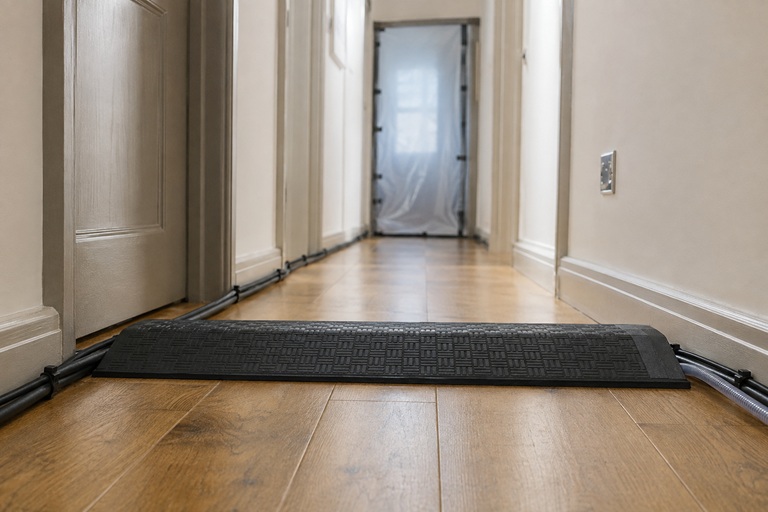
Draw two routes where partial occupation is proposed. The domestic route connects the entrance, sleeping area, bathroom and food facilities without crossing the workface. The contractor route connects the work zone, equipment, materials and waste exit. If the same narrow staircase or hallway must serve both, agree timed access or reconsider occupation.
Separation must work outside working hours too. Barriers, temporary doors and covers should remain secure; tools and chemicals should be stored safely; and emergency escape should not depend on moving equipment first. Children, pets and anyone likely to enter a restricted area unintentionally require particular consideration.
Line Four — A Home Needs Essential Functions, Not Just a Dry Bed
Test the proposed green zone as a temporary home. Does it have safe drinking water, a usable toilet and washing facility, suitable cooking or food arrangements, heating, lighting, ventilation and a secure entrance? Can prescribed medicines be stored correctly and can occupants sleep without unacceptable disturbance?
Continuous drying equipment produces sound and heat, occupies floor space and needs a safe power and condensate arrangement. A professionally designed dehumidification setup should account for occupancy, but equipment should not be moved, switched off or redirected casually to make a room more comfortable. Changes can undermine the drying plan or create new cable and drainage risks.
A property may technically retain each facility while remaining impractical. One functioning bathroom shared with a work crew, a kitchen isolated for several weeks or equipment beside the only bedroom may justify temporary accommodation even without one dramatic hazard.
Line Five — Apply the Decision to the Actual Occupants
The same map can produce different decisions for different households. Consider babies and children, older people, pregnancy, mobility or sensory needs, respiratory conditions, immune suppression, shift work and home medical equipment. Contractors can explain the work environment, but individual medical concerns should be discussed with an appropriate healthcare professional.
Also account for the emotional effect of the incident. Noise, loss of privacy, repeated contractor access and seeing damaged belongings can make remaining at home unsustainable. A decision to move temporarily is not an admission that every room is physically unsafe; it may be the proportionate response to the complete living conditions.
Run a Daily Occupancy Change Record
The map should be reviewed whenever the scope changes. Opening a ceiling can move a room from amber to red; electrical clearance may return a route to green; removing contaminated material may allow the containment boundary to shrink. Date every change and identify who authorised it.
- Morning status: work planned, routes, isolated services and rooms unavailable that day.
- Change trigger: new moisture spread, odour, mould, structural concern, failed equipment or unexpected material.
- Evening condition: barriers secure, cables protected, waste removed and safe domestic routes restored as agreed.
- Emergency contact: named person for equipment alarms, leaks, power loss or boundary failure outside working hours.
Professional water-damage restoration should integrate this occupancy record with the moisture map and work programme. It prevents the living arrangement from becoming an informal promise that nobody revisits.
Make the Accommodation Decision Evidential
If the home cannot be lived in, contact the insurer promptly and ask how the policy handles reasonable alternative accommodation, limits and approval. Record the red areas, lost facilities, expected work and household needs rather than relying only on the phrase “uninhabitable”. Cover and arrangements depend on the policy.
Keep the occupancy map, contractor programme and any professional safety findings with the insurance evidence file. Landlords and managing agents should also record how affected residents are being protected and kept informed.
If you are unsure whether partial occupation is workable during restoration, request an assessment of your London property. The right answer is not simply stay or leave. It is a map showing where normal life can continue, where access is controlled and what evidence must change before each red boundary is removed.
