
A brown ceiling mark does not automatically mean the entire ceiling must come down. Equally, a wall that has returned to its usual colour is not automatically fit for a coat of paint. The right response sits between those two assumptions and depends on what the surface is made from, how wet it became and whether it remains sound.
After the leak is stopped, a restoration assessment should lead to one of four clear verdicts. Understanding those verdicts helps homeowners avoid unnecessary demolition without keeping materials that have lost their strength, cleanliness or connection to the structure.
The Four Possible Verdicts
| Verdict | What it means | Typical next step |
|---|---|---|
| Retain and monitor | The material remains secure and shows a suitable drying response | Continue controlled drying and repeat readings |
| Open for access | The visible face may be sound, but the cavity or insulation behind it needs attention | Create limited access and reassess concealed layers |
| Repair locally | Most of the surface can remain, with defined failed sections removed | Patch with a compatible material after drying |
| Remove and replace | The material is unsafe, contaminated, badly distorted or no longer serviceable | Record the scope, remove safely and reinstate when the structure is ready |
The cheapest verdict is not always “retain”, and the safest verdict is not automatically “replace everything”. A poor local repair can fail twice, while unnecessary removal can increase disruption and destroy sound original material.
The Wall Inspection: Six Questions Before Any Decision
- What is the wall made from? Modern plasterboard on studs, gypsum plaster on masonry and traditional lime plaster behave differently when wet.
- Where did the water come from? A clean supply-pipe leak presents different hygiene concerns from sewage, groundwater or water that has passed through contaminated materials.
- How long was it exposed? Brief surface contact is not equivalent to prolonged saturation inside a closed cavity.
- Is the finish still bonded? Bulging, crumbling, softness, open joints or a hollow response can indicate local failure.
- What is happening behind it? Insulation, timber grounds and the reverse face of board may remain wet after the room-facing surface improves.
- Is it drying consistently? Repeat measurements matter more than a single reading or the number of days since the leak.
These questions turn a visual inspection into a material decision. Where the construction is unclear, moisture mapping and limited access may be more useful than removing a large area on assumption. Professional water damage restoration should establish both the visible condition and the likely behaviour of concealed layers.
Modern Plasterboard: When Can It Stay?
Plasterboard is porous and can lose strength when heavily saturated. Retention may be possible after a small clean-water incident if the board remains firm, flat and securely fixed, the cavity is accessible to drying and readings demonstrate progress. The paper faces, joints and lower cut edges require particular attention.
Replacement becomes more likely when the board is sagging, swollen, crumbling, extensively mould-affected or contaminated. Wet insulation trapped behind otherwise acceptable board may also change the decision because it can obstruct drying and cannot always be cleaned effectively.
A local cut can sometimes create access while preserving the rest of the wall. The opening should be planned around the framing and final repair rather than made as a rough exploratory hole that creates unnecessary work.
Traditional Plaster Deserves a Different Conversation
Older London properties may contain lime plaster on solid walls or lath-and-plaster construction. These finishes should not be judged by plasterboard rules. Lime plaster can soften when wet yet harden again as it dries, and sound areas may be suitable for retention. Local detachment, broken plaster keys or failed sections can sometimes be repaired with compatible materials.
That does not mean every historic finish can be saved. Sagging ceilings, widespread loss of bond, damaged supporting laths or repeated leaks need specialist assessment. Decorative cornices and fibrous plaster elements add further considerations because their fixings and concealed supports may be affected.
Compatibility matters during reinstatement. Replacing breathable traditional finishes with an unsuitable dense system can alter how the wall manages moisture. A conservation-aware repair may protect both the appearance and future performance of the building.
Why Ceilings Have a Stricter Safety Threshold
A damaged wall is usually assessed from beside it; a damaged ceiling is suspended above people, furniture and electrical fittings. Gravity makes distortion more significant. A pronounced bulge, new sagging, cracking, falling debris or movement around a light fitting should be treated as a reason to keep the area below clear.
The visible stain may not sit directly beneath the source. Water can travel across the upper surface of plasterboard, along joists or through insulation before appearing. Inspection therefore has to consider the ceiling void and the room above, not just the outline seen from below.
Do not touch wet light fittings or enter standing water to isolate electricity. Affected electrical components should be checked by an appropriately qualified person. If the ceiling’s stability is uncertain, do not puncture the bulge or remove material from beneath it as a DIY investigation.
Two Shortcuts That Produce the Wrong Verdict
“Everything that became wet must go” ignores material type and condition. It can result in sound plaster, original mouldings or reusable timber being removed without evidence. Careful drying and local repair may preserve more of the property while still resolving the damage.
“Anything dry to the touch can stay” makes the opposite mistake. Surface warmth, colour and firmness do not confirm the condition behind a finish. The cavity may contain wet insulation, and a board can appear acceptable between visibly distorted fixings. Retention should be supported by investigation and drying progress.
A Material Passport for Common Wall and Ceiling Layers
| Material | What the assessment considers | Possible outcome |
|---|---|---|
| Painted plasterboard | Firmness, distortion, paper condition and contamination | Dry and retain, patch locally or replace |
| Gypsum plaster | Bond, softness, salts, cracking and substrate condition | Retain after drying or remove failed sections |
| Lime plaster | Bond, lath or masonry support and compatibility | Conserve, re-anchor or repair locally where practical |
| Fibrous insulation | Saturation, cleanliness, settlement and accessibility | Dry only where suitable or replace affected material |
| Timber laths and framing | Moisture level, movement, decay and structural soundness | Dry and retain, treat or repair as required |
| Wallpaper and vinyl coverings | Trapped dampness, adhesion and contamination behind the finish | Remove where necessary to inspect and dry the substrate |
Do Not Confuse Decoration With Repair
Stain-blocking paint has a legitimate place at the end of some repairs. It is not a drying method and cannot stabilise weakened plaster. Decorating begins only after the cause is resolved, the material decision has been made, required access is closed correctly and the substrate is ready for the chosen finish.
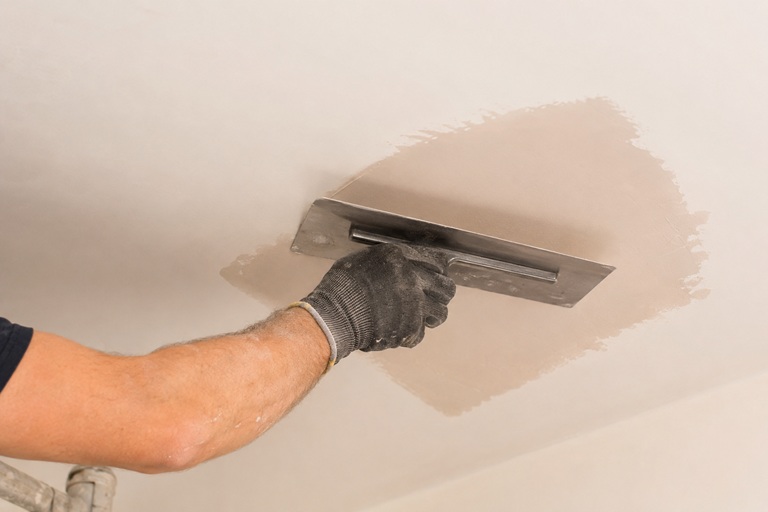
The same principle applies to skimming. A fresh plaster layer can create a smooth appearance while concealing dampness or poor adhesion underneath. For larger projects, coordinated water-damage repairs and reinstatement ensure drying evidence passes into the plastering, joinery and decorating stages.
The Repair-Ready Handover
Before wall or ceiling repairs begin, the handover should answer four points: the leak source is resolved, affected materials have been identified, retained sections have reached an appropriate condition and the repair method matches the existing construction. When those answers are supported by evidence, retention becomes a professional decision rather than a gamble.
If you need an informed verdict on damaged plaster, board or ceiling finishes, request a water-damage assessment in London. The inspection can define what should stay, what needs access and what must be repaired or replaced.
