
The leak was repaired, the room was dried, and the stain was decorated. Then a shadow returned through the paint, the skirting began to smell musty, or the same corner felt damp again. That does not automatically mean the original repair failed. It does mean that the incident should be reopened.
A recurring mark can be caused by new water, retained moisture, condensation, salts or damage left in the finish. Several can occupy the same patch. The answer comes from comparing the original event with the new evidence.
The recurrence rule: the same symptom in the same place does not prove the same cause.
Open a Recurrence Card Before Disturbing the Evidence
Create a one-page record as soon as the change is noticed. Photograph the whole wall, then the mark with a ruler nearby. Note the date, recent rainfall, heating and ventilation, plumbing or appliance use and whether the room had been closed. Describe the symptom precisely: darker colour, bubbling paint, powdery crystals, mould spotting, swollen timber or odour.
Mark the boundary with removable tape and photograph it later from the same position. Record whether it expands, fades in dry weather or changes after a shower, heating cycle or rainstorm. Do not puncture a wall or ceiling that may conceal services or contaminated material.
Retrieve the source report, moisture map, drying readings, photographs and completion record. Without those reference points, a surveyor may describe today’s condition but not how it differs from sign-off.
Seven Patterns Behind a Returning Mark
These patterns are working hypotheses, not diagnoses. The visible clue moves a possibility up or down the list; testing must still establish the source.
| Recurrence pattern | What may be happening | Evidence worth comparing |
|---|---|---|
| 1. The source is intermittent | A pipe joint, shower seal, roof detail or drainage route still admits water only under particular conditions. | The mark follows the same rain, plumbing use or operating cycle as before. |
| 2. A second source shares the exit point | Water from another service or external route travels through the same void and appears at the familiar low point. | The trigger, highest wet point or direction of spread differs from the first incident. |
| 3. Moisture remains in a concealed reservoir | Wet screed, insulation, masonry or a closed cavity continues releasing moisture after the exposed surface improved. | Material readings change over time without a matching new leak event. |
| 4. The repair restricted evaporation | A dense coating, impermeable floor finish or closed construction traps moisture or redirects its drying face. | The symptom developed after decoration or reinstatement rather than after water use or rain. |
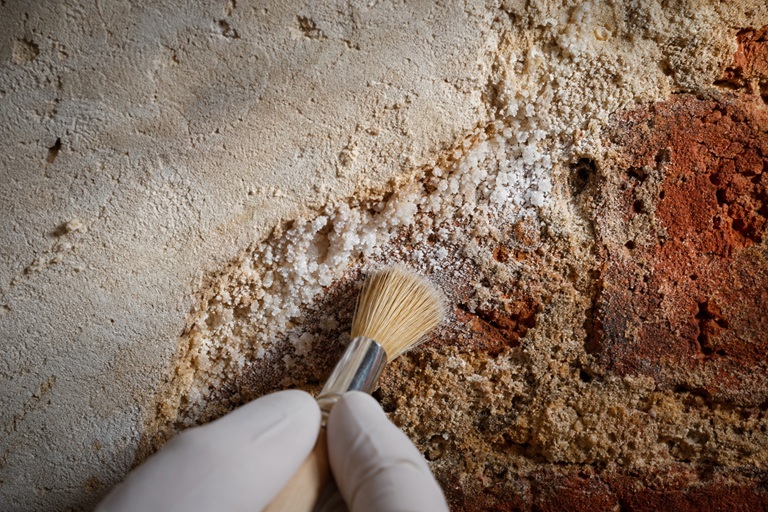
| 5. Salts are reacting to room humidity | Hygroscopic salts absorb moisture from the air, while crystallising salts can leave a white, powdery deposit. | The surface feels clammy or changes with humidity, but other evidence of fresh ingress is absent. |
| 6. Condensation has occupied the old cold spot | A thermal bridge, restricted airflow or high indoor humidity creates surface moisture where the earlier damage occurred. | The pattern tracks cold weather, room use, furniture position and surface temperature. |
| 7. The structure is dry but the symptom remains | Residual staining, damaged paint, contaminated porous material or an odour-holding item survives the drying process. | Material readings remain stable while the appearance or smell persists without spreading. |
Salts show that moisture has moved through a material, but not when or from where. Some also affect electrical resistance readings. A high reading on plaster or masonry must be interpreted with the construction, salt condition and other measurements.
Run Four Elimination Tests, Not One Damp-Meter Test
- Test the suspected source. A qualified person may isolate plumbing, operate one fitting at a time, inspect drainage or observe the exterior in suitable weather. The test should reproduce or exclude a credible route safely.
- Map the material trend. Repeat appropriate readings at labelled points across affected and reference areas. A trend is more useful than one unexplained number, particularly on masonry and layered floors.
- Correlate the environment. Compare room humidity, air and surface temperatures with occupancy, ventilation and weather. This helps separate a condensation cycle from water entering the construction.
- Create justified access. If non-destructive evidence cannot resolve the case, a borescope, lifted edge, small opening or sample may reveal a wet void, failed connection or dry structure. Plan access around services, hazardous materials and the repair that follows.
A useful water-damage reassessment ranks the remaining explanations and states what evidence supports each one. “Damp present” is a condition report; it is not a complete diagnosis.
Ask What Changed Since Drying Was Signed Off
Recurrence investigations often turn on a change that initially seems unrelated. Drying equipment may have been removed, heating reduced, vents closed or furniture pushed against the repaired wall. New paint, vinyl flooring or fitted joinery may have altered evaporation. Seasonal cold, exceptional rain or renewed use of a little-used shower can expose a route that stayed quiet during the original monitoring period.
Build a short “before and after” list, including works elsewhere in the property. A replaced bathroom, roof repair, insulation upgrade or change in occupancy can alter water movement, air movement or surface temperature. The aim is not to assign blame; it is to find the variable that explains the timing.
Do Not Let Decoration Become the Diagnostic Test
Stain-blocking paint can be appropriate after the substrate is ready, but using it to see whether a mark returns destroys evidence and delays the answer. Dense coatings can also be unsuitable for permeable traditional fabric. Likewise, fragrance, surface bleach or a new bead of sealant may change the symptom without resolving moisture behind it.
Keep finishes undisturbed until the recurrence has been recorded and any necessary inspection agreed. If mould is extensive, sewage was involved, or the surface may contain hazardous material, avoid sanding, drilling or directing a fan across it before a safe working method is established.
Reopen the Scope Without Rewriting the Original Case
Preserve the first incident file and add the recurrence as a dated section. Notify the restoration contractor, property manager or insurer promptly where relevant, and ask what evidence it requires before opening finishes or commissioning further work. Policy cover, warranties and contractual responsibilities depend on their terms; recurrence by itself does not establish liability.
The revised scope should distinguish three things: work that was completed correctly for the evidence available, an original condition that remained unresolved, and a genuinely new event. This distinction helps an insurance evidence file explain why another survey, drying period or repair is being requested.
If the mark is expanding, water is near electrics, a ceiling is sagging or contaminated water may be present, treat it as a new emergency rather than waiting for a routine review. Otherwise, request a recurrence investigation in London with both the original records and the new recurrence card available.
Close the Case With an Observation Window
Do not choose a universal number of dry days. The observation window should be long enough to include the condition that previously triggered the symptom: representative rainfall, normal shower use, ordinary heating or a period without drying equipment. During that window, repeat photographs and readings at the same points.
Release for final decoration when the source has been controlled, material trends are stable, concealed areas have been addressed and the symptom does not return under normal conditions. Record any residual stain that requires cosmetic treatment separately from active moisture. A reopened case is complete not when the patch is hidden again, but when the evidence explains why it came back—and why it should now stay away.
