
A dehumidifier can be exactly the right tool after a small, contained water incident. It can also run for weeks in the wrong room while moisture remains beneath flooring or inside a wall. The difference is not simply the size or price of the machine. It is whether the drying problem has been defined.
Before arranging equipment, decide which service you actually need: humidity control, straightforward equipment hire or a managed structural-drying programme. They overlap, but they are not interchangeable.
First, Name the Job
Humidity control deals mainly with moisture in the air. It may suit an otherwise dry room affected by condensation, laundry or seasonal humidity, once the underlying cause has been considered.
Equipment-assisted drying can suit a limited, visible clean-water incident where standing water has been removed and the wet materials are accessible. The user still needs the correct unit, sensible positioning, safe drainage and a way to judge progress.
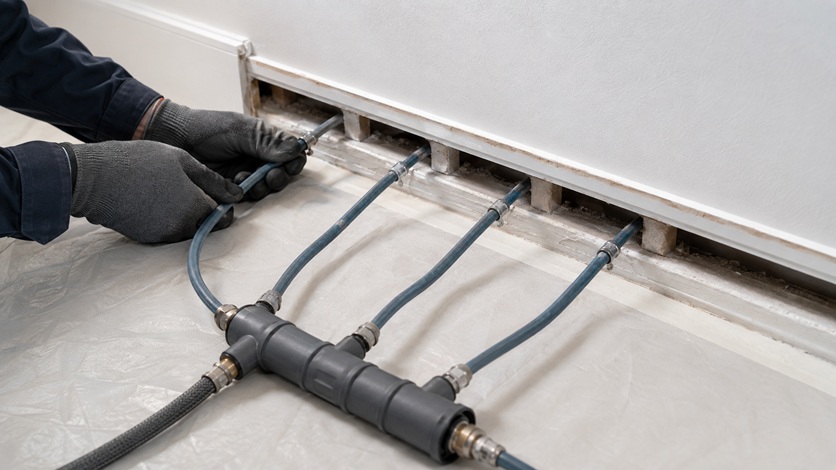
Structural drying addresses water held within the building: plaster, masonry, screed, timber, insulation and concealed cavities. It starts with investigation and may combine extraction, selective access, air movement, dehumidification and repeat moisture measurements.
The Seven-Gate Dehumidifier Hire Test
Answer each question before treating equipment collection as the start of the job.
- Has the water source definitely stopped? A machine cannot keep pace with an active supply leak, defective drain or continuing rainwater entry.
- Do you know the water was clean? Sewage, drain water and floodwater require contamination controls before ordinary drying.
- Has standing water been extracted? Dehumidification removes water vapour; it is not a substitute for pumping or wet extraction.
- Is the affected area small and fully visible? A damp patch beside a washing machine is different from water that has travelled beneath several rooms.
- Are the wet materials accessible? Closed wall cavities, insulation, floating floors and kitchen plinth voids may need investigation or controlled opening.
- Is there safe power and condensate drainage? The circuit, sockets, cable route and method of emptying or draining the unit must all be suitable.
- Can progress be checked? A falling room-humidity reading does not by itself confirm that a wall, floor or ceiling has reached an appropriate condition.
If every gate has a confident “yes”, a properly selected dehumidifier hire package may be proportionate. A “no” involving contamination, electrical safety, hidden spread or structural materials points towards professional assessment. “I do not know” is also useful: it identifies what must be checked before equipment is specified.
What the Machine Can—and Cannot—Do
A dehumidifier lowers the amount of moisture in the surrounding air. That drier air can accept more moisture as wet materials release it. The collected water is then held in a tank or discharged through a hose. This makes the unit one part of a drying process, not a device that directly sucks water through every wall and floor.
Performance depends on room temperature, air movement, the volume of the space, how open it is to adjoining areas and the materials involved. Different machine types suit different operating conditions. Selecting by the highest advertised extraction figure can therefore be misleading because laboratory capacity and real conditions are not the same thing.
Room relative humidity is useful as a trend, particularly when readings are taken consistently. It should still be interpreted alongside material measurements: the air can respond quickly while a dense slab, masonry wall or concealed timber remains wet.
A full tank proves that water was collected. It does not prove where that water came from or that every affected layer is now dry.
The Five-Station Drying Circuit
A managed project connects five operations. Leaving one out can slow the others or create a misleading result.
- Station 1 — Stop and remove: resolve the source, pump or extract free water and deal with immediate safety issues.
- Station 2 — Reveal: map the spread and create justified access to wet underlay, insulation, voids or enclosed surfaces.
- Station 3 — Circulate: move appropriately dry air across exposed materials and into areas where evaporation is required.
- Station 4 — Collect: use dehumidification to remove released water vapour from the drying environment.
- Station 5 — Verify: repeat material and environmental readings at consistent locations until the agreed drying goal is reached.
This circuit also explains why adding several powerful machines is not automatically better. Air can bypass a concealed wet zone, an open window can change the drying environment and excessive local heat can affect certain materials. Equipment quantity follows the drying design, not the other way around.
Six Red Flags for Hire-Only Drying
- Water has passed beneath laminate, engineered wood, vinyl or a fitted kitchen.
- The ceiling, plasterboard or insulation became heavily saturated.
- More than one room is affected, or the visible boundary continues to expand.
- The property has a basement, suspended timber floor or inaccessible service void.
- There is mould, persistent odour, uncertain contamination or a previous unresolved leak.
- The insurer, landlord or property manager requires a documented drying record.
These conditions do not always mean extensive demolition. They mean that a machine should not be prescribed before the construction and moisture distribution are understood. Targeted access and monitored water-damage restoration may preserve more material than prolonged blind drying.
Your Equipment Commissioning Sheet
If hire is suitable, record the setup on delivery day. This turns “leave it running” into a manageable task.
- Machine and location: identify which unit belongs in each room and keep the intake and outlet clear.
- Room arrangement: follow the supplied instructions on doors, windows and containment; casual ventilation can undermine some dehumidification setups.
- Water removal: establish whether the tank needs manual emptying or the hose has a secure, suitable drain route.
- Operating checks: note unusual noise, icing, warning lights, leaks or unexpected shutdowns and report them.
- Occupancy: consider heat output, sound, children, pets and safe cable positioning before continuous operation.
- Review point: agree when conditions will be checked and what evidence will determine collection or extension.
Do not place hired electrical equipment in standing water or use a socket that may have been affected. Do not direct strong airflow across suspected mould or contaminated material without professional advice, as particles and contaminants may be spread.
What You Are Buying With Managed Structural Drying
The additional service is not merely delivery of a larger dehumidifier. It is responsibility for the drying problem: surveying the construction, defining affected zones, selecting and positioning equipment, arranging access, checking environmental conditions and recording the material response. The plan can be adjusted when one area dries faster than another.
Basements, concrete slabs, thick masonry and layered floors often need this wider view because large amounts of moisture can be held out of sight. Purpose-designed basement drying may also need to account for ventilation, waterproofing systems, sumps and the possibility of continuing ingress.
If the choice is unclear, ask for drying advice for your London property and describe the source, affected rooms, materials and time since the incident. The right recommendation may still be simple hire—but it will be hire based on the job rather than hope.
Choose a Return Condition, Not Just a Collection Date
A rental period answers how long you possess the machine. A drying goal answers when the property is ready for the next step. Before equipment leaves, confirm that the source is resolved, retained materials have been checked and concealed areas are not being ignored. That is the difference between a room that feels less humid and a building that is genuinely ready to recover.
