
A fire does not leave one neat area labelled “damage”. It creates several overlapping losses. Heat may weaken one part of the building, smoke may travel into rooms the flames never reached, firefighting water may collect on a lower floor and affected electrical systems may remain unsafe after surfaces look clean.
Putting all of that into one general clean-up list makes important decisions disappear. A more useful approach is to open four separate damage ledgers, then connect them room by room. Each ledger records a different route, test and recovery condition.
The post-fire rule: the flame boundary, smoke boundary, water boundary and safe-working boundary are rarely identical.
Begin With the Incident Handover
Do not enter simply because the emergency vehicles have left. The fire and rescue service may provide an incident handover or an “after we leave” record explaining what happened, whether re-entry is permitted, which services were isolated and how to refer to the incident. Keep this document with the insurance file.
A permission to enter is not permission to switch everything back on or begin demolition. Structural instability, weakened glazing, wet electrical equipment, sharp debris and contaminated residues may still require controls. If access is restricted, organise surveys and emergency security through the authorised route rather than crossing a barrier for photographs or belongings.
Ledger One — Heat, Flame and Structural Change
This ledger starts at the seat of the fire and works outwards. Record charred timber, distorted metal, cracked finishes, displaced roof materials, damaged doors and windows, and areas opened by the emergency response. Apparent survival is not a structural verdict: finishes can conceal altered connections, services and supporting elements.
Temporary work should have a defined purpose. Boarding may secure an opening, propping may stabilise an element and a temporary covering may exclude rain, but none is the final repair. Photograph the condition before and after each measure, identify who specified it and prevent later trades from treating it as permanent.
Ledger Two — Smoke, Soot and the Air Path
Smoke follows pressure, openings and air movement rather than staying inside the burnt room. It can pass beneath doors, through service penetrations, along corridors and into ventilation routes. Close inspection may therefore find deposits on high shelves, inside cupboards, around vents and on the reverse side of objects in otherwise intact rooms.
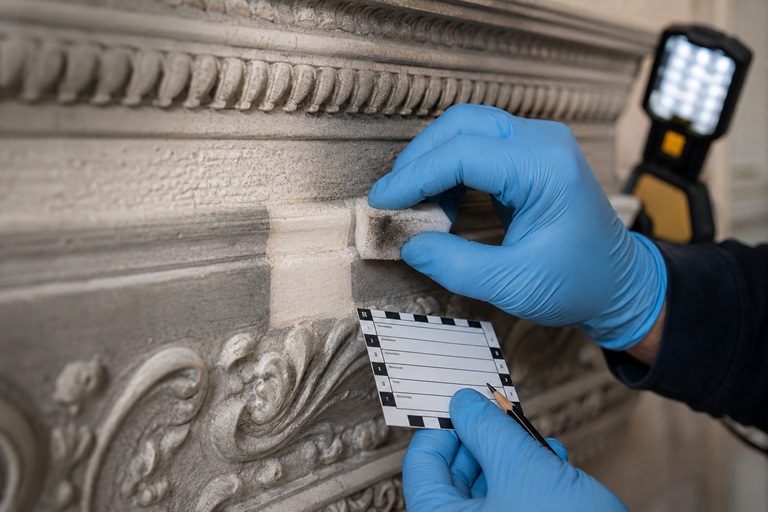
Map visible deposits and odour separately. Neither should be used alone to decide the full boundary. The material that burned, the temperature and the surface receiving the residue all influence the cleaning response. Painted plaster, unfinished timber, stone, fabric and electronics cannot be assigned one universal chemical or technique.
Trial cleaning should be small, documented and matched to the substrate. Casual wiping can push residue into a porous finish or turn a local mark into a larger smear. Uncontrolled fans can also redistribute particles before the affected route has been contained and assessed.
Ledger Three — Firefighting Water and Hidden Moisture
The water that helped save the property can create a second damage pattern. It may move through floor junctions, ceiling openings, ducts and stairwells before collecting well below the fire. A ground-floor ceiling can therefore be saturated even when the fire was contained upstairs.
Map water independently from smoke and heat. Note standing water, swollen boards, wet insulation, stained ceilings and damp wall bases. Then investigate concealed layers where construction allows water to travel. A surface that becomes lighter after ventilation is not proof that the floor build-up or partition behind it is dry.
Extraction and structural water-damage recovery must be coordinated with residue control. Powerful airflow should not begin merely because materials are wet; the team first needs to know whether it could move soot or other fire residues into a clean area. Once the cleaning boundary is controlled, material readings can guide the drying design.
Ledger Four — Contents, Equipment and Building Services
Contents should be recorded where they are found before movement, unless leaving them creates an immediate hazard. Use a room reference and item number so photographs, treatment decisions and insurer discussions point to the same object. Separate emotional value, replacement value and technical recoverability; they are different considerations.
| Status | What it means | Next control |
|---|---|---|
| Leave in place | Movement is unsafe or would disturb evidence | Restrict access and await the appropriate survey |
| Quarantine | The item may be recoverable but could transfer residue | Package or isolate it with a traceable label |
| Specialist assessment | Value or construction makes routine cleaning unsuitable | Refer artwork, documents, textiles or electronics to the relevant specialist |
| Document for disposal | Retention is unsafe or recovery is not viable | Photograph, describe and obtain insurer direction where practical |
Gas, electricity, alarms, heating, data and ventilation systems also belong in this ledger. Record what was isolated and by whom. Do not energise wet or fire-affected equipment to “see if it works”; return to service should follow competent inspection, testing and any necessary repair.
Use an Intersection Board to Build the Scope
Now place the four ledgers against a room schedule. A bedroom may have no flame damage but show smoke deposition and wet flooring. The kitchen may require a structural review, residue removal and appliance assessment. The hallway may be structurally sound yet remain part of the contaminated access route.
- Fire only: investigate heat-affected material and the repair boundary.
- Smoke without fire: test surfaces and define the residue-cleaning method.
- Water without visible smoke: map moisture through the complete construction.
- Several ledgers intersect: agree the safe sequence before separate contractors begin work.
This prevents one trade undoing another. Opening a wet ceiling before debris control may release deposits; decorating before odour sources are treated may conceal rather than resolve them; reinstalling services before drying is verified may close inaccessible moisture into the repair.
The Five-Signature Room Release Card
A room is ready for reinstatement only when the disciplines affecting it have each released their part of the work. Use one simple card or digital record per room.
- Access signature: structural and immediate safety restrictions have been resolved or clearly carried into the repair plan.
- Residue signature: the smoke and soot boundary has been treated using a recorded method, including concealed or connected routes where relevant.
- Moisture signature: retained materials have reached the agreed drying condition, supported by readings rather than appearance alone.
- Services signature: affected systems have been inspected, tested and authorised for the next stage by competent people.
- Scope signature: insurer decisions, retained items, removals and the reinstatement specification agree with the evidence file.
The card does not need five different companies. It needs five clear decisions with named responsibility and supporting records. One unresolved signature keeps the room open rather than allowing a programme date to overrule the evidence.
Keep the Claim Aligned With the Restoration
Contact the insurer promptly, preserve the fire-service handover, photograph damage when access is permitted and retain invoices for necessary emergency measures. Speak to the insurer before substantial cleaning, disposal or permanent work unless action is required to protect people or prevent further damage. Policy terms determine the cover and authorisation process.
London Water Damage provides coordinated fire and smoke damage restoration in London, including the water-damage work that can follow firefighting. The technical record can also support the company’s insurance claim assistance.
If your property has suffered fire, smoke or suppression-water damage, request a post-fire assessment before disconnected repairs begin. Recovery becomes manageable when every room has four honest ledgers—and none is closed just because the burn marks have disappeared.
