
Heavy rain does not need a nearby river to flood a London property. Intense rainfall can collect on roofs, paving and roads faster than local drainage can carry it away. Water may then descend external steps, overtop a lightwell, surcharge a drain or find a low doorway. The warning period can be short.
A useful flood plan therefore contains decisions, not just equipment. It tells each person what to move, which route to use, when to stop protecting the building and who to contact if water enters. Prepare it as three envelopes—physical or digital—and open each only at the stage printed on the front.
The heavy-rain rule: do the property work while the ground is dry, so safety can take priority when the water starts moving.
Envelope One — Open in Ordinary Weather
This envelope contains the property’s baseline. Begin with a dry-weather walk from the highest rainwater collection point to the lowest internal space. You are not trying to predict every flood. You are identifying the routes that deserve attention before a forecast arrives.
- Roof line: look from ground level for overflowing gutters, disconnected downpipes and staining that suggests repeated discharge.
- Ground line: check whether paving and thresholds direct water towards or away from entrances, garages and air bricks.
- Below ground: include basement steps, lightwells, channels, sump pumps and pump-discharge routes.
- Drainage line: keep private gullies and gratings clear without entering confined spaces or lifting covers you are not competent to handle. Report highway drainage defects to the council.
- Internal line: locate safe escape routes, upper storage, utility isolation points and rooms where people or pets could become trapped.
Photograph the exterior and each important room while they are unaffected. Save policy details, an approximate contents inventory, emergency contacts and copies of essential documents where they remain accessible during a power cut. Flats and managed buildings need a shared version identifying who controls communal drains, pumps, plant rooms, gates and alarms.
Choose Protection Before You Need It
Property-level protection might include a correctly specified door barrier, air-brick cover, non-return drainage measure or pump arrangement. Suitability depends on the construction and expected water route. A product bought during a warning is not useful if nobody has checked its fit, storage location, installation sequence or effect on ventilation and escape.
Test pumps according to the manufacturer’s instructions and consider what happens if mains power fails. Do not alter sewers, block a shared drainage route or divert water towards a neighbour. Permanent measures should follow a flood-risk assessment and an appropriate design rather than a collection of unrelated products.
Envelope Two — Open When Heavy Rain Is Forecast
A Met Office warning describes expected weather impacts across an area; it does not guarantee that one street will or will not flood. Check current weather, flood and local authority information, then activate the household plan early enough to work in dry, well-lit conditions.
Run the Twenty-Minute Household Brief
- Account for people and pets. Decide who may need help, where everyone will go and how an evacuation instruction will be followed.
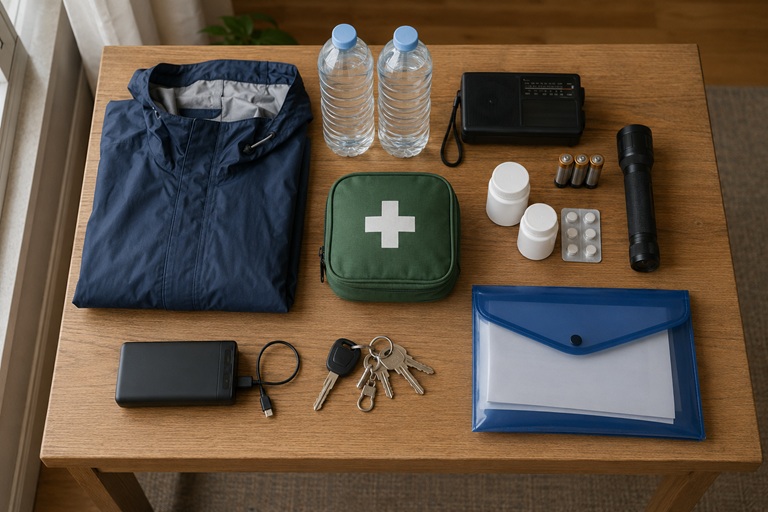
- Protect communication. Charge phones and power banks, place torches where they can be reached and keep important numbers available offline.
- Move the vehicle early. If a safer location is available, relocate it before surrounding roads or ramps begin collecting water.
- Check the exit. Keep keys, medication, weatherproof clothing and the emergency kit beside the safe route—not in a basement or low cupboard.
- Assign one observer. One person monitors official information and known external routes from a safe position, preventing several people from repeatedly going outside.
Pack the Lift List in Its Actual Order
Write the lift list from irreplaceable to replaceable: medication and mobility equipment, identity and insurance documents, sentimental items, portable electronics, vulnerable business records, then movable furnishings. Give each category a named higher location. “Move valuables” is too vague when several rooms must be handled quickly.
Raise items without creating unstable stacks, blocking stairs or attempting a lift that risks injury. Photograph larger possessions that must remain. In a basement, move contaminated-water-sensitive contents first, but never continue carrying belongings after water begins entering the access route.
Set the Stop Line
The plan must state when property protection ends. Stop if water is rising quickly, the route out is deteriorating, darkness prevents safe observation, sewage is suspected or emergency services advise evacuation. Never enter flowing water, drive through a flooded road or touch an electrical switch while standing in water.
Gas, electricity and water supplies should be isolated only if official advice requires it and the controls can be reached safely before water affects them. Household members should know the locations in advance; a storm is not the time to search behind wet appliances or experiment with unfamiliar equipment.
Envelope Three — Open After Water Enters or the Rain Passes
If anyone is in danger, call the emergency services. Once people are safe, record the event without walking into the affected area. From a dry position, photograph where water is entering, the highest visible level, external conditions and the rooms involved. Note the discovery time, odour, colour and whether sanitary fittings or drains are backing up.
Contact the insurer as soon as practical and ask what it requires before disposal, opening-up or permanent repairs. Keep receipts for necessary emergency measures. A prepared water-damage insurance file makes it easier to connect the weather event, the entry route and the resulting loss.
Floodwater may contain sewage, chemicals and sharp debris. Do not assume clear water is clean. Do not restore electricity, gas or water after flooding until the relevant utility company or qualified person confirms it is safe. Ordinary household fans and dehumidifiers should not be introduced before electrical safety, contamination and retained water have been assessed.
Commission the First Survey With Five Facts
When requesting professional flood restoration, provide the likely source, affected rooms, approximate water depth, possible contamination and whether services are isolated. Mention basements, suspended floors, fitted kitchens and inaccessible cavities because they affect the inspection and equipment plan.
Standing water removal is only the first operation. Moisture may remain within plaster, masonry, screed, insulation and floor build-ups after the surface is clear. A flooded lower-ground level may require monitored basement and structural drying, source investigation and controlled access before reinstatement begins.
Rehearse the Envelopes Once a Year
Run a dry rehearsal before the wetter season and after any change to the property or household. Time how long it takes to reach the kit, find policy details, move priority items and explain the stop line. Check whether a new tenant, child, pet, mobility need, extension or basement conversion has made the plan obsolete.
After every severe-rain event, record what worked and what nearly failed. A gully that filled, a warning that went unnoticed or a barrier that could not be fitted is useful evidence for improving the next version. If your London property has flooded before or its entry routes are unclear, request a flood-preparedness assessment before the next forecast turns preparation into an emergency.
The most effective final post in a water-damage plan is written before any water arrives: people first, decisions second and property protection only while it remains safe. Three prepared envelopes turn that principle into actions a household can actually follow.
