
A wet floor rarely gives a simple answer. Carpet may feel almost dry while the underlay remains saturated. Tiles may look untouched while water sits beneath a loose edge. Timber boards can cup dramatically, then settle as their moisture content returns towards normal.
That is why the useful question is not merely “Can this flooring be saved?” It is “Which parts of this floor system remain clean, stable and capable of drying?” The answer may involve retaining the visible finish, replacing one concealed layer or carefully lifting materials so the structure below can be treated.
A Floor Is a System, Not Just a Surface
Most finished floors contain at least three layers. Each responds differently to water, so a sensible assessment works downwards rather than judging the room from standing height.
- The surface: carpet, boards, laminate, vinyl, stone or tile. This is where staining, lifting, swelling and movement are easiest to see.
- The middle layer: underlay, adhesive, battens, screed or a floating-floor membrane. It can hold water and obstruct drying even when the surface appears improved.
- The support: timber floorboards, chipboard, plywood, joists or a concrete slab. Its condition determines whether a repaired finish will have a sound, dry base.
Water can also travel sideways beneath a floor, extending beyond the visible mark. A professional water-damage assessment maps that spread, identifies the construction and considers the water source before deciding what to lift.
Open the File for Your Flooring
Carpet and underlay: can they be separated?
Carpet affected by a recent clean-water leak may be a salvage candidate if water is extracted promptly, the carpet can be lifted safely and both faces can be cleaned and dried. Its condition, construction, backing and any pre-existing wear all influence the decision.
Underlay is considered separately. Saturated foam or felt can retain moisture, soil and odour, and replacement may be more practical even when the carpet is retained. Carpet exposed to sewage, drain water or substantial contamination requires a much stricter hygiene assessment; appearance alone is not evidence that it is suitable to keep.
Laminate: why swollen edges rarely reverse
Laminate usually has a decorative wear layer over a fibreboard core. Once water penetrates the joints and the core swells, raised seams and softened edges commonly remain after drying. A few lightly affected boards may sometimes be replaced if matching stock is available and the surrounding floor remains stable.
Widespread joint swelling, trapped water beneath the floating floor or damage to the locking system often makes a larger lift necessary. Skirting and beading can conceal the perimeter expansion gap, so the full extent is not always visible from the centre of the room.
Solid and engineered wood: allow evidence before judgement
Timber absorbs moisture and can expand, cup or crown. Those changes do not automatically make it waste. Sound boards affected by a limited incident may be dried under controlled conditions, monitored and reassessed after their moisture distribution begins to stabilise. Sanding a distorted floor too early can create a new unevenness if the boards continue to move.
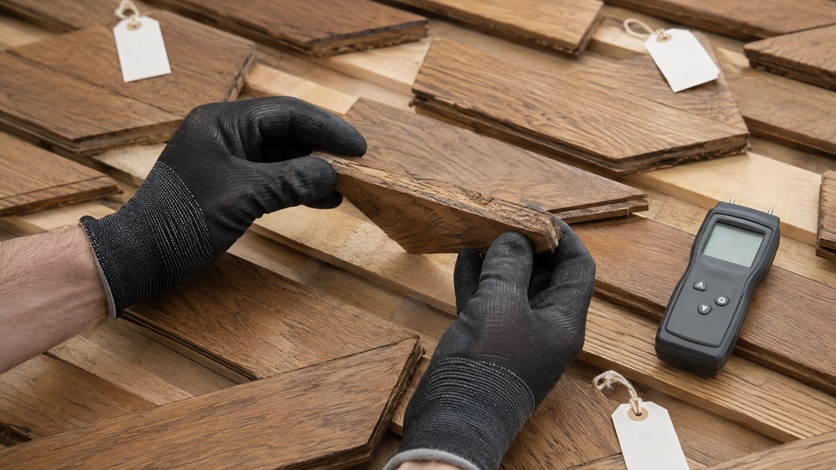
Engineered boards vary in construction and adhesive quality, so delamination between layers is an important warning sign. Blackening, split tongues, loose blocks, decay or severe deformation may require local or extensive replacement. Original pine boards or parquet can justify careful lifting, numbering and storage when access below is needed.
Vinyl and luxury vinyl tile: the surface may hide the problem
Many vinyl finishes tolerate brief contact on top, but water entering at joints or perimeters can become trapped underneath. Damp adhesive may soften or fail, causing bubbles, movement or discolouration. A floating LVT system may be liftable, whereas fully bonded products require an assessment of both the covering and adhesive.
Older tiles and flooring adhesives may contain hazardous materials. Do not sand, scrape or lift an unknown product simply to look underneath it; arrange appropriate identification before disturbing it. A small, planned inspection is safer and more informative than uncontrolled removal.
Tile and stone: hard finishes still have vulnerable layers
Ceramic, porcelain and stone may survive water exposure, but grout, adhesive, membranes and the substrate require attention. Hollow sounds, loose units, cracked grout or fresh movement can indicate that the bond or base has been affected. Water can also migrate beneath a tiled finish from an adjacent room.
If the tiles remain secure and the build-up can dry, wholesale replacement may be unnecessary. Where access is required, selective lifting can limit damage, although matching discontinued tiles is not always possible. Natural stone may need specialist cleaning because an unsuitable chemical can alter its finish.
The Subfloor Often Decides the Final Answer
A reusable floor covering should not be laid back over a wet or weakened base. Timber floorboards and plywood may dry successfully if they remain structurally sound and air can reach the affected area. Chipboard is less forgiving: heavy saturation can cause swelling, loss of strength and damaged joints that remain after the surface dries.
Concrete and screed do not usually need replacement merely because they became wet, but they can hold considerable moisture. Impermeable flooring installed before that moisture has reduced sufficiently may blister, debond or trap dampness. The appropriate threshold depends on the proposed finish and adhesive system, so a generic “dry” reading is not enough.
Suspended timber floors add a hidden zone below the boards. Water in the void, wet insulation and restricted air movement may require targeted access and ventilation. In older London buildings, preserving good original boards can be worthwhile, but the drying method should respect the construction rather than forcing a rapid cosmetic result.
Four Moves That Make Flooring Damage Worse
- Walking repeatedly across a swollen floor. This can damage softened joints and transfer contaminants into unaffected areas.
- Turning up direct heat. Aggressive heat can drive uneven movement in timber and does not remove humid air from the room. A designed dehumidification and air-movement setup is easier to control.
- Lifting everything before documenting it. Photographs, measurements and a room-by-room inventory can support the technical decision and an insurance claim.
- Ordering the new floor immediately. Reinstatement specifications should follow moisture monitoring, subfloor repairs and any required acclimatisation—not the date the surface first feels dry.
A Better Salvage Decision Uses Five Pieces of Evidence
The decision should record the water source, duration of exposure, extent beneath the surface, material condition and progress during drying. It should also distinguish removal for access from disposal. A parquet block may need to come up without needing to go in the skip.
Repeat moisture readings help show whether retained layers are responding. Visual checks then confirm whether boards are settling, adhesive remains bonded and odours or staining are developing. This evidence-led approach protects useful material while defining replacement where cleaning, stability or drying cannot be achieved reliably.
The final handover should state which layers were retained, which were replaced and why, together with the condition required before the new finish is installed. For projects involving several trades, coordinated residential flood repair keeps the drying record connected to joinery, flooring and decoration.
Before the Floor Disappears Under Furniture Again
A successful flooring repair is not simply flat and attractive on installation day. It rests on layers that are clean, suitably dry and structurally capable of supporting it. If your carpet, boards, laminate, vinyl or tiles have been affected by a leak, arrange a flooring and moisture assessment in London before deciding what to discard or cover.
