
A basement can flood from above, through the sides, from beneath the floor or backwards through its drainage. All four routes can leave the same final scene: water collected at the lowest point, a dark margin around the room and an unpleasant smell. Treating that final scene as a diagnosis is where expensive mistakes begin.
The basement rule: the place where water finishes is not necessarily the place where it entered.
Finding the source requires a short investigation. The useful clues are not only stains and puddles, but also timing, weather, drainage behaviour, the highest wet point and the way the building is constructed.
Start With the Event, Not the Stain
Before cleaning changes the scene, create a simple incident log. Do this only from a safe location. Do not enter deep or moving water, touch wet electrical fittings or attempt to isolate services when reaching them would mean crossing the flooded area.
- Record the time. Note when the water was first seen and whether the level is rising, stable or falling.
- Record the conditions. Was rain falling, had there been prolonged wet weather, or was it an otherwise dry day?
- Record what was in use. Include washing machines, showers, toilets, heating and any basement plumbing.
- Photograph the route. Capture external steps, lightwells, gullies and street conditions as well as each affected internal wall.
- Note signs of contamination. Drain odour, discoloured water, waste matter or water emerging from sanitary fittings changes the safety and cleaning response.
These observations are more valuable than a guess made after the water has been pumped away. They can also support an insurance claim and help the surveyor reproduce the likely sequence of entry.
Suspect One: Water Arriving From Above
“From above” does not always mean a roof leak. In basements, rainwater may descend external steps, overtop a lightwell, pass through an open or poorly detailed entrance, or discharge beside the building from a blocked gutter or defective downpipe. Water can then follow the stair junction or wall face to the floor.
Internal sources belong in this file too. A supply pipe, heating pipe, waste connection or appliance on the floor above can send water down a service chase and appear far from the failed component. The strongest clues are a high starting point, localised ceiling or wall saturation and a relationship with water use rather than weather.
Suspect Two: Entry Through the Basement Perimeter
Lateral entry often becomes visible at the wall-floor junction, through cracks, around service penetrations or where an existing waterproofing detail has failed. External ground levels, paving falls and blocked channels can concentrate surface water beside the structure. In a converted basement, one discontinuity in a cavity-drain or tanking system can provide a route into the finished room.
A tide mark along one wall is useful evidence, but it does not prove that the entire wall is defective. Water may have entered at a single higher point, moved behind a lining and emerged at the bottom. Inspection must distinguish the entry route from the place where gravity finally made it visible.
Suspect Three: Pressure From Beneath the Floor
Groundwater can rise through cracks, construction joints and other vulnerable points in a below-ground structure. It may appear after prolonged wet weather rather than during one dramatic cloudburst. Water emerging in several low points, recurring seepage after surface rain has stopped and no corresponding plumbing use can all move this source higher on the list.
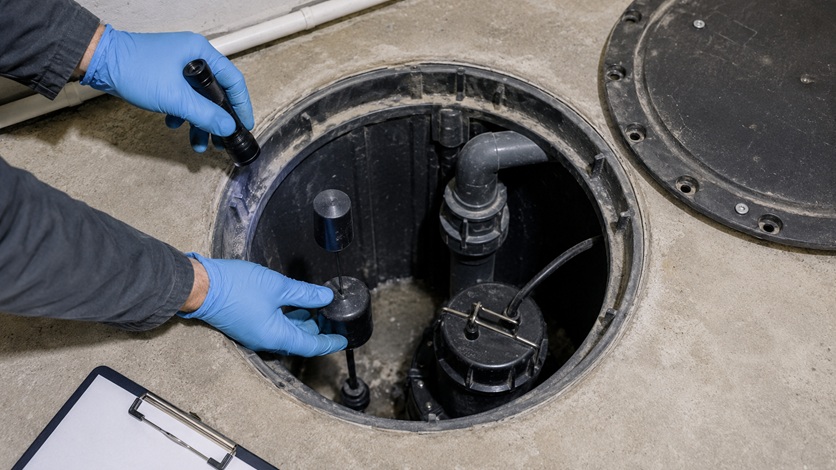
Existing sumps and pumps must be included in the investigation. A power interruption, blocked intake, failed float switch, undersized pump or obstructed discharge can turn a manageable inflow into a flood. The question is not simply whether a pump exists, but whether the whole arrangement operated as intended during the event.
Suspect Four: Drainage Coming Backwards
Heavy rainfall or a blockage can overwhelm drainage and force water back through low-level toilets, showers, sinks or floor drains. Basement fittings are particularly exposed because they sit below the upper parts of the property. Several fixtures gurgling, slow drainage before the incident, an obvious drain odour or water appearing through a sanitary connection are important clues.
Suspected sewer water should be treated as contaminated. Avoid direct contact and do not spread it through the property on shoes, tools or unsecured belongings. Reporting responsibilities can depend on whether the affected pipe serves only the property or forms part of the wider sewer network, so the drainage route must be identified rather than assumed.
Let the Timing Cross-Examine the Evidence
If water appears during intense rain, inspect surface routes first: street or garden runoff, external steps, gullies, lightwells and surcharging drains. The cause may involve more than one route if rainwater and foul drainage share local infrastructure.
If it appears hours or days later, investigate slow movement through the ground, delayed passage behind linings and groundwater conditions. The absence of rainfall at the moment of discovery does not rule out weather as the trigger.
If it happens in dry weather, test plumbing, heating, appliances, private drainage and the operation of any sump. A small pressurised leak may continue steadily, while a waste leak may only show when a particular fitting is used.
If the event keeps returning, compare photographs and moisture maps from each occurrence. A repeatable pattern connected to the same weather or household activity is far stronger evidence than the appearance of one stain.
Three Clues That Often Give a False Confession
- White deposits on masonry: salts indicate that moisture has moved through the material, but they do not identify the current source by themselves.
- A wet wall-floor joint: this is a common exit point for concealed water and not automatic proof that the joint is where entry began.
- A musty smell without standing water: this can indicate retained moisture, but condensation, damp contents and historic leakage also need to be separated from an active flood route.
Covering these clues with a sealant may hide them temporarily without controlling the cause. Waterproofing, drainage alterations and pump installations should follow diagnosis and an appropriate design, especially where the property has traditional permeable construction.
What a Source Investigation Should Actually Test
A useful survey follows the evidence beyond the room. It can include moisture mapping at different heights, inspection of wall and floor junctions, plumbing pressure or isolation tests, drain surveys, checks to gullies and downpipes, sump operation and limited access behind finishes. External levels and recent weather records add context.
The result should be a ranked diagnosis: confirmed source, likely contributing routes and any points that still require testing. If your basement is taking in water and the route is unclear, request a basement water-damage assessment in London before commissioning a permanent repair.
Pumping Out Is the Start of Recovery, Not the End
Removing standing water exposes the affected surfaces; it does not confirm that the structure is dry. Water may remain behind wall linings, beneath flooring, within screed, in insulation or inside a cavity-drain system. Contamination must be addressed before ordinary drying work, and heavily flooded structures may need a controlled water-removal plan.
Professional basement and structural drying should be based on the materials present, the amount of moisture and whether the source has been controlled. Equipment is then positioned as part of a measured drying plan, with repeat readings used to track change rather than relying on the number of days elapsed.
Keep the incident log, survey findings, photographs and drying records together. That small evidence file connects the flood to the eventual water-damage restoration and gives future owners or contractors something more reliable than “the basement was waterproofed once”. The right repair begins when the water’s route has a name.
